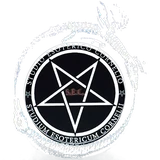
The five-pointed star is one of the oldest and most misunderstood signs in human history. Some associate it only with magic, some fear it, and many wear it around their neck without knowing where it comes from. Behind this simple figure, which can be drawn with a single continuous line, lies a long and layered history made of mathematics, philosophy, religion and initiatic symbolism.
Pentagram and pentacle: a necessary distinction
In everyday language the two words are confused, but in esoteric tradition they mean different things.
- Pentagram: the geometric figure itself, the five-pointed star drawn with five intersecting segments. The name comes from Greek and literally means "five lines".
- Pentacle: an object, usually a disc of metal, wood, wax or parchment, engraved with symbols, names or figures. The pentagram inscribed in a circle is the best-known pentacle, but Renaissance grimoires contain pentacles that do not include the star at all.
This difference also explains why, in tarot, the suit of "coins" is often called "pentacles": they are discs, symbolic coins, linked to the element of earth and to the material world.
An ancient figure before it was a magical one
The pentagram already appears in carvings from ancient Mesopotamia, but its best-known meaning arises in the Greek world. The Pythagorean school regarded it as a sign of recognition and associated it with health and harmony. The reason is also mathematical: in a regular pentagram the segments divide one another according to the golden ratio, the proportion the Greeks saw as an expression of cosmic order.
In medieval Christianity the five-pointed star had a surprisingly positive reading. In the English poem Sir Gawain and the Green Knight the hero's shield bears a golden pentangle, explained as a symbol of the knight's virtues, of the five wounds of Christ and the five joys of Mary. The sign was an emblem of moral integrity, not of darkness.
The human being within the star
In the Renaissance the pentagram became a map of the human being. Treatises on occult philosophy show the famous figure of a man with arms and legs spread, inscribed in the star: head at the top, hands and feet at the other four points. It is the idea of the microcosm, the human being as a small universe reflecting the order of the great universe.
From this image comes one of the most widespread readings:
- the top point represents spirit;
- the remaining four points represent the four elements, fire, air, water and earth;
- the circle that often encloses the star signifies unity and protection.
Spirit "governing" matter is the deep meaning of the symbol: consciousness that orders natural forces instead of being swept away by them.
Upright or inverted
In the nineteenth century French occultism established a distinction that still weighs on the public image of the star. The pentagram with one point upward was interpreted as spirit ruling matter; the one with two points upward as matter prevailing over spirit, and therefore associated with infernal meanings. Hence, in the twentieth century, the use of the inverted star in some contemporary currents and the popular distrust of the symbol in general.
It is worth remembering that this reading is relatively recent. For most of history the orientation of the star had no such sharp moral value, and in several cultures the sign was drawn either way.
The pentagram in ritual practice
In the modern ceremonial tradition the pentagram is not only a drawing to look at but a gesture. The practitioner traces it in the air with the hand or with a tool, starting from a specific point depending on the element to be invoked or dismissed. The meaning is symbolic: to mark out, to order, to make a principle present.
The pentacle as an object, on the other hand, is placed on the altar as a representation of earth, or kept as a sign of personal consecration. In the grimoires of the Solomonic tradition pentacles are tablets with figures and inscriptions, each dedicated to a purpose and a principle.
How to read the symbol today
For Studio Esoterico Cornelio the pentagram should be read first of all as a tool of awareness. Contemplating it means asking whether the different parts of yourself, instinct, emotions, thought, body, are guided by a centre or each go their own way. It is not an object that "acts" by itself: it is a figure that recalls an inner hierarchy.
Some concrete examples of serious use of the symbol:
- as an image for meditation, following the continuous path of a line that never breaks;
- as a reminder of the balance between the four elements of your life;
- as a sign of belonging to a path of study, worn discreetly rather than as a provocation.
In short
- The pentagram is the five-pointed figure; the pentacle is the object, often a disc, bearing engraved symbols.
- The sign originates in the ancient and Greek world, linked to harmony and the golden ratio, and in the Middle Ages it also had Christian value.
- In the Renaissance it became the image of the human microcosm: spirit at the top, four elements at the other points.
- The moral distinction between upright and inverted star is a nineteenth-century reading, not a universal one.
- Its deepest use is inward: a reminder that spirit should order the forces of life.