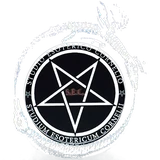
The red horn hanging from a car's rear-view mirror, the medal worn around the neck, the Egyptian scarab in museums, the seal engraved on a metal disc. All of these are objects given a value beyond their material. In everyday language they are called amulets or talismans interchangeably, but esoteric tradition carefully distinguishes the two. Understanding the difference helps you read the history of these objects and their meaning more clearly.
The fundamental difference
| Amulet | Talisman | |
|---|---|---|
| Main function | to protect, to ward off | to attract, to favour, to strengthen a quality |
| Origin | often natural or from folk use | constructed according to precise rules |
| Symbolic movement | defensive | active |
| Examples | horn, eye, horseshoe, coral | engraved seals, number squares, grimoire pentacles |
In short: the amulet is a shield, the talisman is a key. The first keeps away what is feared; the second is constructed to represent and concentrate a principle you wish to cultivate.
Amulets in history
Ancient Egypt
The Egyptians made extensive use of amulets, both for the living and for the dead. Among the most common:
- the scarab, linked to the god Khepri, the sun reborn each morning, a symbol of regeneration;
- the ankh, the looped cross, sign of life;
- the wedjat eye, the Eye of Horus, sign of wholeness and protection;
- the djed pillar, symbol of stability.
Many of these amulets were placed among the wrappings of mummies, each in a precise position.
The Roman world
Roman children wore the bulla, a small container hung around the neck holding protective objects. It was laid aside when the boy came of age. The fascinum, a phallic-shaped amulet against the evil eye, was also widespread.
Italian tradition
Italy, and especially the South, preserves a rich culture of folk amulets:
- the cornicello, the little horn, traditionally red, handmade and received as a gift;
- the mano cornuta and the mano fica, gestures that became objects;
- the horseshoe hung above the door;
- the cimaruta, an old Neapolitan silver amulet shaped like a sprig of rue, with small symbols hanging from its branches.
These objects almost always arise from the same concern: protecting the home, children and family from envy and misfortune.
Talismans in learned tradition
The talisman, on the other hand, belongs mainly to the learned magical tradition of the Middle Ages and Renaissance. One of the most important texts is the Picatrix, a Latin translation of an Arabic treatise, which describes how to make images and seals according to precise correspondences of materials, colours, figures and timing.
Renaissance treatises feature magic squares, grids of numbers in which the sum of every row, column and diagonal is always the same. Each was associated with a principle and engraved on plates of different metals. The pentacles of the Solomonic grimoires are another example of the talisman: discs bearing geometric figures, letters and sacred names.
What characterises the talisman is conscious construction: material, sign, timing and intention are chosen carefully to form a coherent whole.
Symbolic value today
For Studio Esoterico Cornelio both amulet and talisman should be understood as symbolic objects, not as devices that work automatically. Their value lies in what they represent and in the relationship the person builds with them.
Some concrete examples of conscious use:
- an amulet received as a gift from a loved one keeps the meaning of that bond and of care;
- a talisman made with attention can become a daily reminder of a quality to cultivate, such as constancy or courage;
- an object carried during a difficult period helps you feel accompanied and keep your centre.
Two common mistakes to avoid: handing the object responsibilities that are our own, and accumulating symbols without knowing what they mean.
In short
- The amulet protects and wards off; the talisman represents and concentrates a principle to cultivate.
- Ancient Egypt knew amulets such as the scarab, the ankh and the wedjat eye.
- Italian tradition preserves folk amulets such as the cornicello and the cimaruta.
- Talismans belong mainly to learned magic, with seals, magic squares and pentacles.
- Their value is symbolic and depends on their meaning and on the relationship built with them.