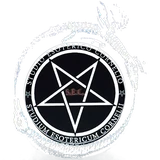
In almost the whole Western tradition, love binding and love rituals take place under the sign of Venus. The brightest planet in the night sky after the Moon has been associated for millennia with beauty, attraction and harmony. Knowing the symbolism of Venus means holding the very grammar of European love magic.
From myth to planet
Before becoming an astrological planet, Venus was a goddess. The Greeks called her Aphrodite, and Hesiod told of her birth from the foam of the sea. In Rome she was Venus, mother of Aeneas and therefore the mythical ancestor of the Roman people. The poet Lucretius opens his poem on nature with a famous hymn to Venus, the force that gives life to every being and calms even the god of war.
This image matters: Venus is not only passion, but a principle of union and peace. In the esoteric tradition she represents the force that attracts like to like and brings differences into harmony.
The two faces of the star
Venus appears in the sky as the morning star or the evening star, depending on its position relative to the Sun. The ancients gave it different names: Lucifer, the light-bearer of dawn, and Vesper, the star of sunset. This dual nature has fed a rich symbolism: love that is born and love that is gathered in, desire that ignites and intimacy that is protected.
In traditional love rituals, some prefer to work with the image of the morning star for new beginnings and with the evening star for consolidating an existing bond.
The correspondences of Venus
The astrological and Hermetic tradition built a system of correspondences linking Venus to concrete elements:
| Area | Traditional correspondence |
|---|---|
| Day | Friday (dies Veneris) |
| Metal | Copper |
| Colours | Green and pink |
| Plants | Rose, myrtle, vervain |
| Animals | Dove, swan |
| Zodiac signs | Taurus and Libra |
| Number | Seven |
The link with copper also has a curious geographical root: the island of Cyprus, rich in this metal, was one of the most important cult centres of Aphrodite. Myrtle, an evergreen, was sacred to the goddess and was used in bridal wreaths.
The magic square of Venus
In the Renaissance, Cornelius Agrippa, in his work on occult philosophy, assigned a magic square to each planet: a grid of numbers in which every row, column and diagonal adds up to the same total. The square of Venus is seven by seven. This is partly where the association between Venus and the number seven comes from, which we find in many love rituals: seven candles, seven knots, seven days.
The square has no "automatic" power; it is a tool of contemplation representing the harmonious order attributed to the planet.
The cycle of Venus
Venus has a remarkable celestial rhythm. Seen from Earth, its position relative to the Sun repeats quite closely every eight years, and in the meantime the planet traces a figure in the sky that, when the points of its conjunctions are joined, resembles a pentagram. This regularity has fascinated astronomers and symbolists alike: partly for this reason the five-pointed star became an emblem of harmony.
For anyone working with love rituals, the cycle of Venus is an invitation to patience. Love, like the planet, has long rhythms and returns that cannot be forced.
Venus and her shadows
Tradition does not idealise Venus. In myth the goddess is also jealous, vengeful and capable of punishing those who offend her, as the tale of Cupid and Psyche recounts. In astrology a "difficult" Venus can indicate vanity, dependence on others' opinions, or the pursuit of pleasure at any cost. Knowing these shadows helps you use her symbolism with balance, without mistaking attraction for love.
Working with Venus consciously
Working with Venus symbolism does not mean filling a ritual with pink and green objects in the hope that it will work. It means choosing elements that help focus attention on what Venus represents: beauty, reciprocity, harmony, shared pleasure. A concrete example is choosing a Friday for a moment of recollection dedicated to the couple, lighting a green candle and writing down what you appreciate about the other person.
In the view of Studio Esoterico Cornelio, Venus is the symbol of a love that attracts without capturing: that is exactly why she is the most fitting guide for a love binding that respects free will.
In short
- Venus, goddess and planet, represents attraction, union and harmony.
- As morning and evening star, she symbolises love that is born and love that is protected.
- Her traditional correspondences are Friday, copper, green, pink, myrtle and the number seven.
- Agrippa's magic square and the eight-year cycle enrich her symbolism.
- Working with Venus means nurturing reciprocity and beauty, not capturing.